The Wicketkeeper’s Work Before the Ball Arrives
Learn how a cricket wicketkeeper reads the bowler, sets a starting position, and tracks each delivery to understand the keeper’s choices and possible responses.
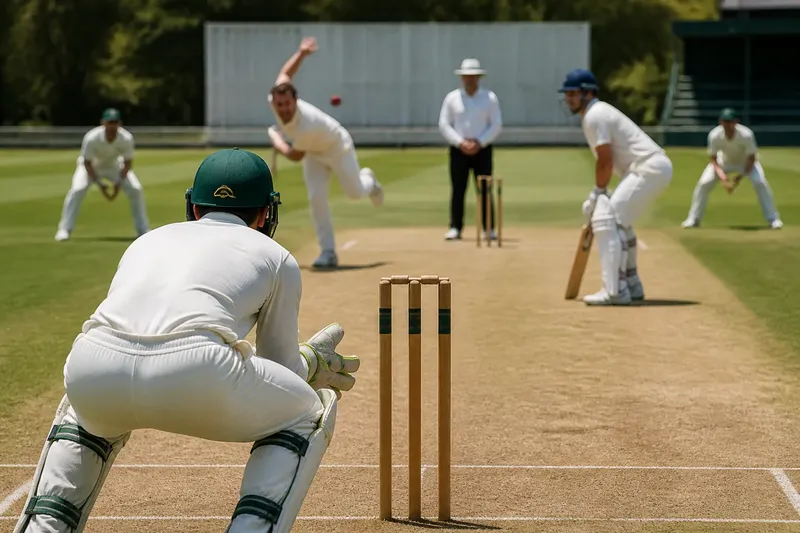
A cricket wicketkeeper’s starting position shows what the keeper needs to be ready for, not exactly what the bowler will deliver. Watch where the gloves settle, then follow the ball and the batter’s movement to understand whether the keeper is preparing for pace, bounce, or a chance to break the stumps.
What should you read before the run-up?
Start with the bowler’s type and the batter’s position. A fast bowler gives the keeper less time to adjust after release, while a spinner’s slower delivery may give the keeper an opportunity to move closer to the stumps.
Notice whether the batter is balanced in the crease or likely to advance. The keeper’s starting position can reflect that movement, but it also depends on the delivery’s pace, bounce, and angle.
Look for a small adjustment before the bowler runs in. A settled stance can reveal more about the keeper’s preparation than a large movement after the ball has passed the bat.
How does the keeper choose a starting position?
The keeper balances time to react against the need to reach the stumps quickly. Standing back leaves room to judge and collect a fast or bouncing delivery; standing up keeps the keeper close enough to gather a slower ball and attempt a stumping if the batter leaves the crease.
“Standing up” means staying close to the stumps; “standing back” means waiting farther behind them. Neither position belongs exclusively to one kind of bowler. A medium-paced delivery that carries sharply may call for room, while a spinner may have the keeper close if the batter often steps out.
Distance is only one clue. A ready keeper usually has flexed knees, weight forward, and hands able to move either way. If the keeper is still shifting at release, they may be adjusting to the batter’s position or correcting their balance.
Where should your attention go as the ball is released?
Follow the bowler’s hand through release, then track the ball to the pitch and toward the keeper. That sequence helps distinguish what the ball actually does from what the keeper appeared to expect.
A short delivery may rise toward the gloves; a fuller one may skid or stay low. Spin can change direction after pitching, so watch the ball’s path rather than assuming it will arrive where its initial line suggests.
The batter’s movement matters too. Someone advancing down the pitch may be trying to meet the ball early, leaving the keeper alert to a possible stumping as well as the delivery’s line.
Say a right-arm spinner faces a batter who has stepped out twice. The keeper moves close to the stumps and settles low; when the batter advances again and misses, the keeper can gather the ball and break the wicket. The sequence makes the keeper’s choice clear: the position prepared for the batter’s movement, even though the outcome depended on the ball and the miss.
How does the keeper adapt to the bowler’s plan?
A bowler’s plan is a pattern of intended deliveries, not a promise that each ball will match it. The keeper may prepare for a line outside off stump, a short ball, or a slower delivery meant to draw the batter forward, then adjust attention to the ball’s actual path and the batter’s response.
The keeper also watches for edges, changes of bounce, and a batter leaving the crease. These are immediate cues from the delivery and the batter, rather than a code that makes the bowler’s next ball certain.
A brief exchange with a bowler or fielder may precede a change in the keeper’s position. Treat that movement as evidence that the setup has changed, then check the next delivery to see how the keeper responds.
What does the wicketkeeper’s position tell you?
Why does the keeper stand back?
The keeper may stand back when pace or bounce makes extra room useful. The space gives them more time to judge the ball and bring it into the gloves if it rises or moves late.
Why does the keeper stand up to spin?
Standing up keeps the keeper close enough to collect a missed ball quickly and attempt a stumping if the batter leaves the crease. It also requires alert footwork because a turning or bouncing delivery can reach the gloves at an awkward height.
Why does the keeper move just before the bowler delivers?
A small adjustment may respond to a changed angle, a batter shifting across, or a revised setup. Check whether the keeper settles before release; a late shuffle may instead be a correction to balance or position.
What should you watch after the ball passes the bat?
Watch whether the keeper gathers cleanly, moves to take an edge, or collects the ball while the batter is outside the crease. Those actions show what the starting position could handle, even when the delivery does not result in a dismissal.
How can you follow the keeper’s preparation ball by ball?
Use these checks to connect the keeper’s position with the delivery and the response. Each observation points to a sensible next question, not a certain prediction.
- Observe the bowler’s pace and bowling hand. If the delivery is quick, watch for room behind the stumps; if it is slower, check whether the keeper comes closer.
- Observe whether the keeper stands up or back. If the keeper is close, watch for a quick collection or stumping chance; if back, track the ball’s bounce and carry.
- Observe the batter’s position in the crease. If the batter moves across, follow the changed angle; if the batter stays still, focus on the ball’s line.
- Observe the batter’s feet as the ball is released. If the batter advances, watch for a stumping opportunity; if the batter holds position, follow the delivery to the gloves.
- Observe the ball from release to pitch. If it rises or turns, track how the keeper adjusts; if it stays low or skids, watch whether the keeper collects near the ground.
- Observe the keeper’s movement after the ball passes the bat. If the keeper gathers cleanly, note how the position helped; if the ball gets past, consider whether pace, bounce, or direction defeated that setup.
After a change of bowler or batter, check the position and movement again rather than carrying over the previous assumption. A keeper moving closer may be responding to a batter who advances, while a keeper standing back may be allowing for bounce or pace.
The wicketkeeper’s work before the ball arrives is preparation for several possible outcomes, not a prediction of one. To follow a cricket wicketkeeper’s choices, notice where the keeper settles, then check what the delivery and batter actually do; that distinction keeps a useful clue from becoming a false certainty.