The Myth of the Perfect Cricket Field: Why Setups Change
A perfect cricket field depends on the batter, bowler and match situation. Learn how to assess field placements, spot tradeoffs and follow tactical changes.
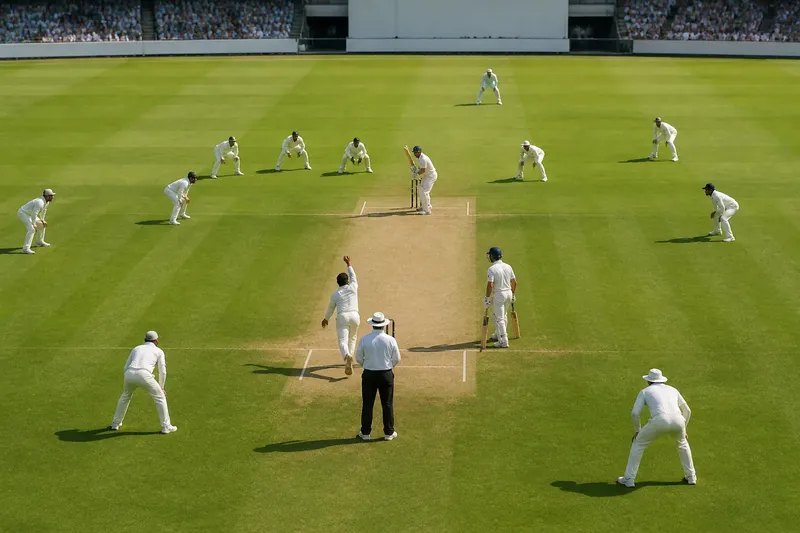
A perfect cricket field depends on the ball a bowler can deliver and the risks a captain chooses to accept. A slip can offer a chance from an edge, for instance, but it also leaves room elsewhere for the batter to score.
To assess a placement, consider the likely shot, the cost of conceding runs and the match situation. A field is a set of tradeoffs, not a promise that every scoring area will be covered.
Why is there no perfect cricket field?
Different deliveries create different chances. A field arranged to support swing toward the outside edge may leave a drive available; moving a fielder to protect that route can mean removing a catcher.
The laws and competition playing conditions also limit some placements. Within those limits, captains decide whether to prioritize a catching chance, protection against a likely scoring shot or pressure on the batter to choose a riskier option.
Those choices are most useful to read as a tradeoff: which outcome is the captain trying to make less likely, and what space has been left open in return?
How does the batter affect field placement?
A batter’s recent shots and preferred scoring areas can influence where fielders stand. Repeated shots off the legs may draw a fielder to square leg or fine leg; frequent cuts may prompt attention to point. These are responses to visible tendencies, not certain predictions.
Handedness changes the angles a bowler and batter create, so a field may need to shift when a left-handed batter replaces a right-hander. A batter moving down the pitch or changing stance can also alter which placements seem useful.
Imagine a right-handed batter has driven several full deliveries through cover. The captain moves a fielder nearer cover and the bowler tries a different line; the expected observable result is that the familiar drive becomes harder to play into the same space, though another scoring route may open.
How do conditions and match goals affect the field?
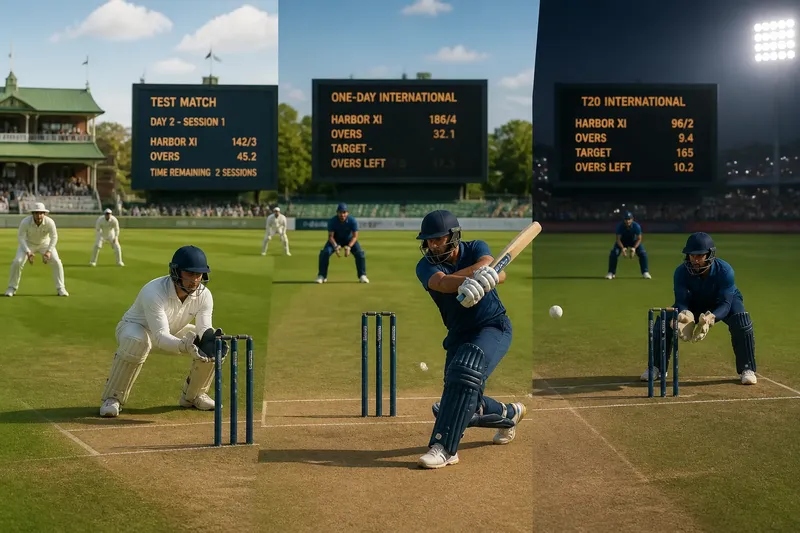
The score, wickets remaining, overs left and format all shape how much risk makes sense. A side protecting a lead may prioritize stopping boundaries, while a side needing a wicket may keep a catcher in place and accept that a gap could yield runs.
Ground conditions can matter, too. A wet outfield may make stopping the ball more difficult, while wind or pitch behavior may influence a bowler’s choices. A new batter may face close catchers; an established batter’s strongest scoring area may instead call for protection.
Limited-overs restrictions can constrain where fielders may stand, and the details vary by competition. When a placement seems unusual, the applicable playing conditions and umpire’s signals can clarify what is permitted.
How can you assess a perfect cricket field during play?
Follow the sequence rather than treating one arrangement as a complete explanation. Notice what changed just before the field moved: a boundary, a near-catch, a new batter or a switch of bowler can each prompt a different response.
- Check the bowler and delivery angle: if the bowler changes pace or switches angle, ask whether the new placement still suits the likely line; if it does not, look for another purpose such as boundary protection.
- Identify the fielder who moved: if a player shifts toward the boundary, consider which shot the captain is guarding; if a player moves closer, consider a catch or a quick stop.
- Compare the next delivery with the adjustment: if the bowler targets the area the position supports, the plan appears coordinated; if not, consider that the bowler may be trying a different approach.
- Watch the batter’s response: if the batter attacks an open gap, the placement has offered a scoring route; if the batter declines that option, consider whether the bowler’s delivery has made it too difficult.
- Check whether the placement persists: if it remains after several deliveries, it may support a broader plan; if it changes quickly, the captain may be reacting to a specific shot or matchup.
- Notice the match context: if the side needs to limit runs, expect more attention to boundary areas; if it needs a wicket, a catcher may be retained despite an open gap.
Say the batter has just hit a boundary through deep midwicket, and the captain moves a fielder to that boundary area. On the next ball, the bowler delivers short and outside off, and the batter cuts for a single through point. The observable result is that the original boundary route has been guarded, but the new delivery and shot have used a different area; the captain can keep the fielder there to protect against another pull or move that player to cover the gap at point.
What questions help explain unusual field placements?
Why do fielders stand close to the batter?
A close fielder may be positioned to catch an edge, stop a mistimed shot or make a quick single harder. If the batter can exploit the space elsewhere, the captain has to decide whether that trade is worthwhile.
Why leave a boundary gap open?
The captain may be protecting another area or keeping a catcher in place, accepting that a well-placed shot could score through the gap. If the bowler can direct the ball away from that route, the risk may be acceptable; otherwise, the captain can move a fielder or change the bowling plan.
Can a captain move fielders between deliveries?
Captains can reposition fielders between deliveries, subject to the laws and competition conditions. A change may respond to the previous shot, a new batter or a revised plan.
Does the field predict the next delivery?
No; a placement can hint at a tactic, but the bowler still chooses the delivery and the batter chooses how to respond. If the next ball does not fit the apparent setup, the captain’s priority may be run prevention rather than a particular shot or catch.
What should an unusual placement make you check?
Look at the likely purpose, then see whether the next deliveries fit it. A deep square-leg fielder might be there to limit pulls, protect the boundary or support a plan to bowl at the batter’s body; the position alone cannot settle which explanation applies.
For a perfect cricket field, judge the choices in relation to the bowler, batter and situation. Ask which risk the captain is accepting, then watch whether the batter or bowler makes that trade worthwhile.